Saturday, 21 December 2013

Attack on Cinque Terre

We did what was for us an unusual thing on this trip - a one day tour of three villages (out of the five) in Cinque Terre, on the rugged west coast of Italy.  This is the equivalent of a guerilla style attack - we went in, hit the strategic places and leave.  Incredibly, we visited the three villages in the space of six hours, including lunch.  This was done with the help of two expert drivers and their vans - we got dropped off in one town, took the train between the towns and got picked up at the last stop.  This saved the pain of driving and looking for parking in the crowded towns - an impossible task.  We had a taste of each place but by no means got the true flavour.  

Unfortunately, it seemed that boat loads of cruise ship tourists did the same thing every day. No wonder there are protests and moves to ban large cruise ships - it must have a negative impact on the towns.  We felt it even when we didn't live there.  The huge crowds turned the small streets of these once attractive coastal havens into busy thoroughfares and whatever ambiance there was had disappeared.  One of the overnight visitors in the village said the only reprieve was early morning and at night.  I suppose in the day time, going on the hiking trails could possibly be a way of avoiding the crowds.  But I would certainly think twice before visiting again, lovely as the villages were.


A bird's eye view of the first town going north from La Spezia, quaint Riomaggiore, dating from the 13th century


Zooming in you can see many of the houses with their balconies and rooftop terraces - they looked like they were stacked on top of one another on the rocks.


The waterfront was a short walk down a windy roadway, shared by pedestrians and boats


The gelataria was the most popular store along the waterfront


Taking a break on the coastal path to admire the scenery and each other...


If I have to guess the name of the trail, it would be Via dell'Amore...;-)


The long tunnel to the train station, decorated with mosaics, made for a terrific acoustic chamber for musicians


This was the train that took people back and forth between the villages 


Next stop: Manarola


Monday, 16 December 2013

The Etruscan hill town of Volterra

For me, the most exciting part of Volterra was getting there.  From San Gimignano, it was a windy zigzag road that made me wish I was driving a BMW.  But both my passengers were asleep and I was able to enjoy the sporty road without them gasping at every turn.  It was quite fun so that by the time we got to Volterra at the top of the hill, it was almost anti-climactical.  

It was mid-afternoon and threatening rain so there were no huge crowds.  We didn't have time to visit all the places in the guide book and had to make strategic choices, dampened further by a thunderstorm which brought torrential rain.  The cathedral was more appreciated for its shelter than its content.  We definitely would have appreciated this important Etruscan town a lot more had we devoted a day to it instead of tagging it at the tail end of a visit to San Gimignano.

But the Etruscan Museum did stand out for its unusual collection of hundreds of funerary urns, which though not as aesthetically pleasing as its collection of Etruscan gold jewelry and sculptures, was quite unique.


One of several ancient city gates in Volterra


The Palazzo dei Priori, built in the 13th century, is the oldest municipal building in Tuscany


The Duomo that sheltered us during the storm


Inside the cathedral with its green and white marble - built in the 13th century after the original was destroyed by an earthquake in the 12th century


The octagonal 13th century Baptistery of San Giovanni across the courtyard was originally a Roman temple dedicated to Sun worship


I like the relaxed pose of this John the Baptist sculpture on the baptismal font - by Giovanni Antonio Cybei


The streets of Volterra


Alabaster is the local stone - beautiful creations in shops throughout the town, including an alabaster museum which I would have liked to visit 


Inside the Museo Guarnacci - the Etruscan Museum

"Urna degli sposi" This is the most unusual of all the urns in the whole museum - the only one with a couple depicted.  The couple was presented as attending a banquet, apparently a social function that Etruscan women were allowed to participate in., while the Romans and Greeks found this egalitarianism unsavoury.  For more on this museum...
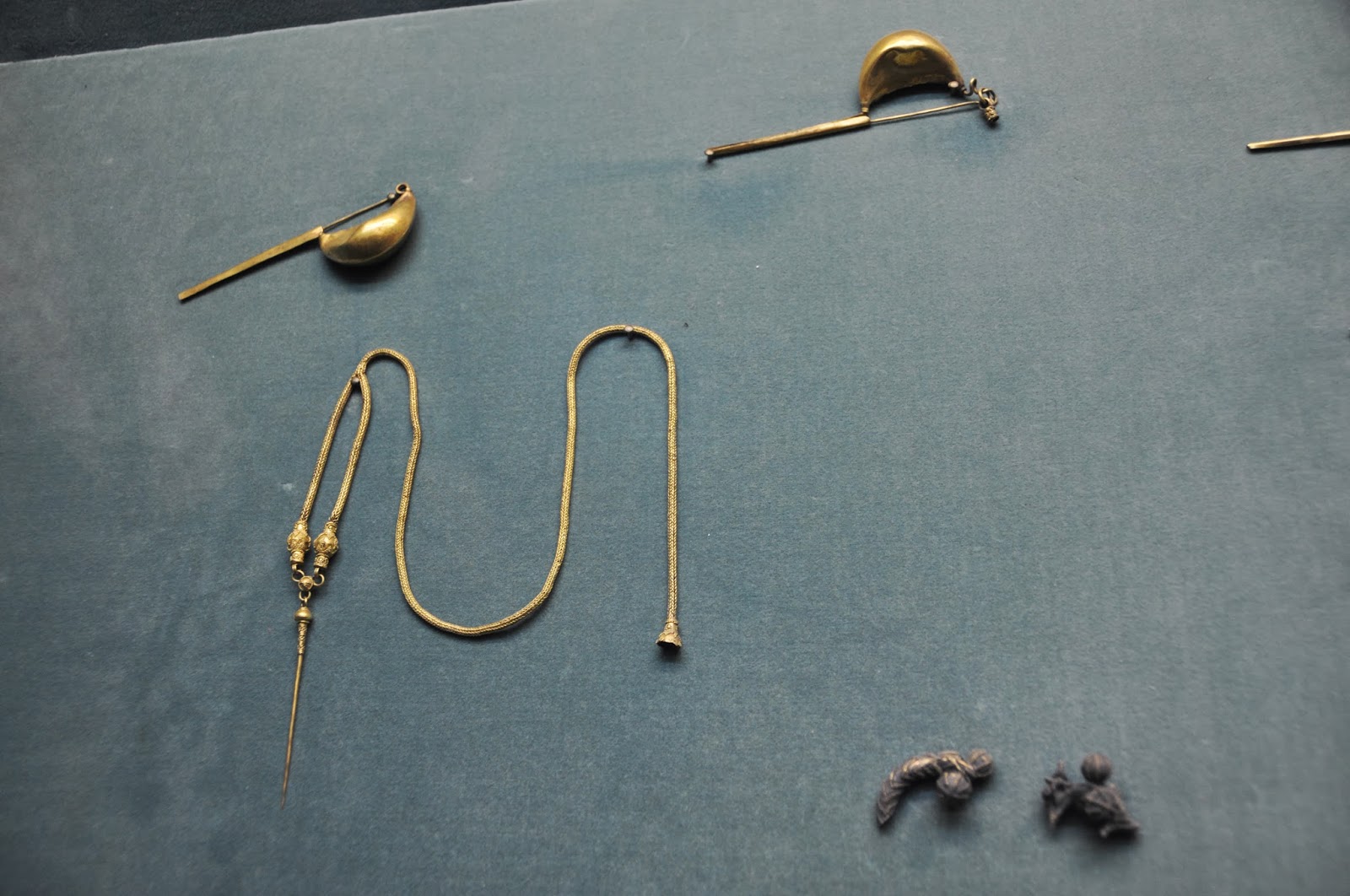
Exquisite gold jewelry from etruscan tombs


"Ombra della sera" (Shadow of the evening) - a key piece in the museum,  reminds one of modern art with the deliberate elongation of the body

I love these elegant figurines


The 13th century etruscan wall


The Roman amphitheatre 


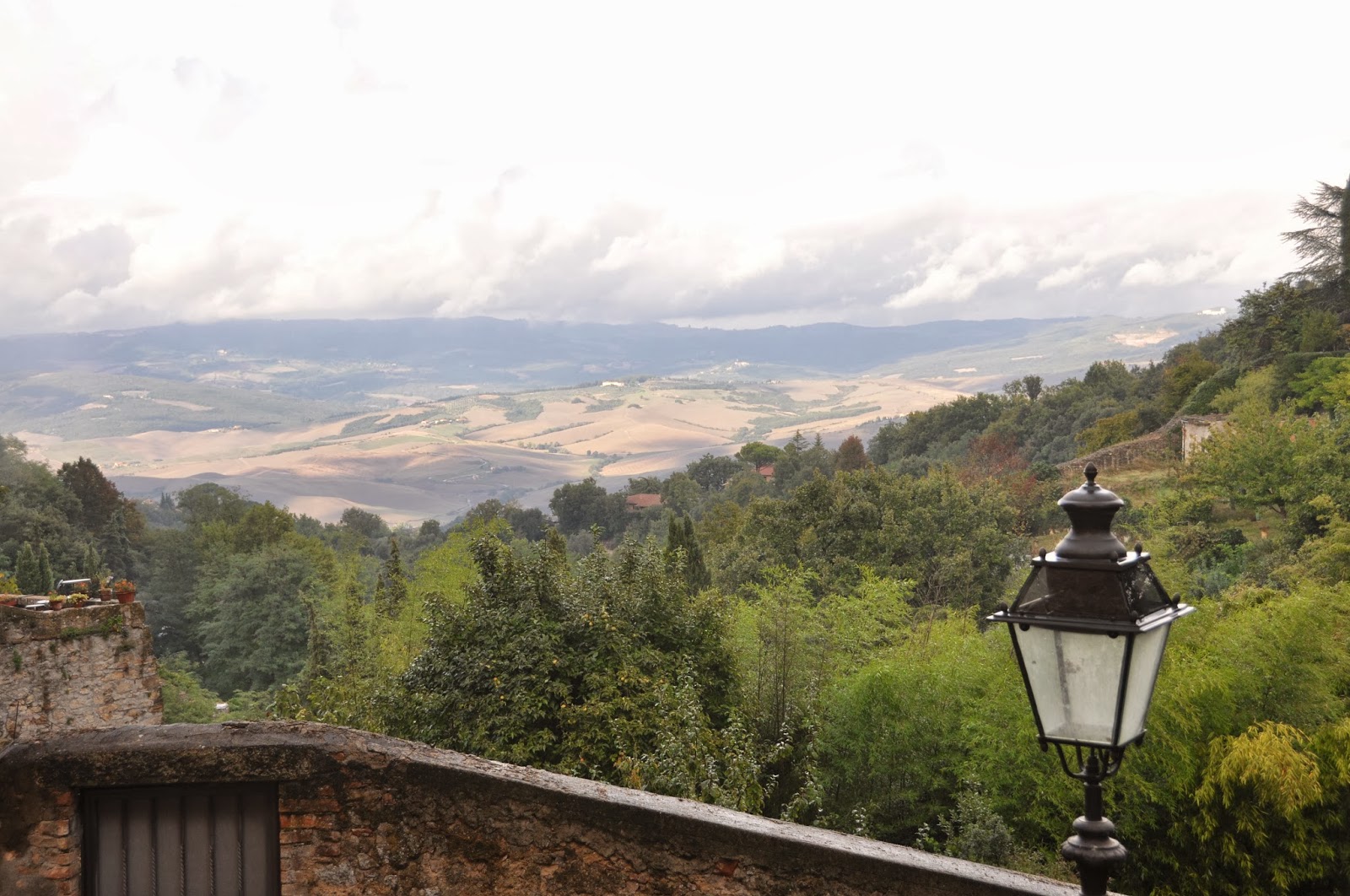
View of the surrounding countryside

Sunday, 15 December 2013

San Gimignano - that unpronounceable tower town

We arrived in this famous hill town on a rainy Monday morning and immediately found that we had to switch into urban battle mode - fighting to enter a parking lot, fighting to keep my parking ticket and fighting for a parking spot!  Are we really in Tuscany?

Although we had been warned about parking in San Gimignano by Rick Steves, we thought we had left things like faulty parking entrance gates and raging drivers behind in the city.  But no, cars were trying to enter the small parking lot from three directions through two small gates, one of which was not working very well.  An obviously stressed out female tried to grab the parking ticket from the driver in front of me because she had entered without taking a ticket from the intermittently malfunctioning ticket machine.  When that was unsuccessful, she tried to grab mine.  While I was able to defend myself it still left a slightly sour taste in my mouth.  What a beginning to what was supposed to be a peaceful Tuscan visit!

However, all went well after we entered the city gates  - no cars allowed.  We just had to battle the rain which was intermittent.  It was a bit of a downer but  it made the sunny part more precious.  It was a particularly gratifying moment when the sun suddenly came out at the end of our climb up the 218 steps of the Bell Tower.  Lo and behold - 360 degrees of Tuscan countryside spread out below us bathed in warm sunshine.  What a view!  It made us forget all the slippery cobblestones we had to wade through in the rain.


Panoramic view of the surrounding countryside from the Bell Tower. 


You can see from this angle the long narrow shape of the town


Beautiful gallery atop the courtyard
The Palazzo del Popolo and its Bell Tower

This 3 ton bell was the main bell in the tower since it was cast in the 14th century by a Florentine.  It was shattered into three pieces during the Second World War but wasn't taken down until 1952.  It was finally restored and placed under the loggia in 2010.

High-rises in the medieval town!  Apparently there are only 17 surviving towers from the original 72 towers, which were constructed as symbols of wealth and power -
surprise, surprise!

The Piazza della Cisterna with its beautiful stone well

We ate lunch in this small restaurant near the gates - good homestyle cooking

Yummy looking cookies


The Gelateria Dondoli claimed to be "GelatoWorld Champion" - recommended by Giuseppina (of the cooking school) - the mango and chocolate I tried was definitely superior to what I had in Florence.  Worth the lineup.

This looked like a good deal!
Che un paesaggio perfetto!


Sunday, 1 December 2013

An Unusual Cathedral - the Duomo in Siena

The Duomo, the Cathedral in Siena is so unusual that it deserves a separate post of its own.  I walked in and didn't know where to start - every inch of the cathedral was covered with something special that would make you want to stop and look, admire it, wonder at it, or gape in awe.  It almost overwhelmed the senses - but it made for a memorable visit.


What you see when you walked in - stunning!


When you looked down - every inch of the floor was decorated with marble mosaics (this is the She-wolf of Siena with the emblems of the confederate cities from the 14th century)


When you looked up - the hexagonal dome with Bernini's gilded lantern


When you look back towards the entrance, you see the stained glass of the Last Supper in the intricate facade


One of the inlaid marble floors almost looked modern


The ornate Carrara marble pulpit sculpted by Nicola Pisana in the 13th century


St. John the Baptist Chapel with the bronze statue of St. John sculpted by Donatello


Detail in the baptismal font - Adam & Eve and the apple


Inside the magnificent Piccolomini library (part of the Cathedral) with its stunning frescoes in the ceiling and the three graces in the centre of the chamber


One of the many gorgeous illuminated manuscripts around the room


Looking back towards the entrance


The facade of the cathedral - apparently the bottom half was romanesque and the top half which was added later was gothic - notice how the pinnacles in the top half are not continuations of the columns at the bottom - unusual architecturally and structurally questionable, yet it has remained standing since the 13th century.


Mosaics in the facade


The mix of pink and white marble in the facade together with the intricate Sienese workmanship made this one of the most impressive structures in Siena - the bronze door was a modern addition just after the Second World War, but it blended right in.

The steep hike from the Baptistry to the Cathedral

The elaborate baptistry with its beautiful  bronzes

                                                                                            
Donatello bronze at a corner
Bell-tower of black and white marble
Also worth a visit is the Museo dell'Opera del Duomo attached to the Cathedral.   What I found most interesting was the original drafts for the mosaic floor in the Cathedral.  They were so massive and overwhelming in the Cathedral it was good to see them in perspective as part of a floor plan.

A truly unique cathedral!