Saturday, 8 February 2025

Antarctica - Port Charcot Gentoo Penguins

Port Charcot is a bay on the north side of Booth Island, which is off the Kiev Peninsula to the west of the Lemaire Channel.  It was first mapped by Jean-Baptise Charcot who led the 2nd French Antarctic expedition in 1904.  He overwintered here and left a cairn which you can see at the top of the hill.  

The landing spot.  The cairn is at the top of hill.


I forgo the pleasure of the view promised at the top of the hill and took my time watching the Gentoo Penguins that were nesting here.  The Gentoos were the largest of the brushtail penguins and supposedly the fastest underwater birds. They were slightly earlier in their breeding cycles than the Adélie Penguins so they were still brooding in their roosts.  We had to wait till they decide to get up to stretch so we can see the eggs. Both parents take turns incubating the eggs.  

There were also some chinstrap and Adelie penguins here too.  The blue-eyed shags nest right in the midst of the penguins.


The Gentoo, distinguished by its red beak


Parents take turns incubating the eggs


Nests lined with pebbles


An egg!


Penguin highways - the pink is from guano , which took on the colour from the krill the penguins fed on


The gentoos took great care picking their way through the rocks, almost like humans


A hop, skip and a jump!


This one Adelie penguin tried to "swim" on its tummy over the ice.


These two chinstraps are hilarious, almost posing for the camera


The blue-eyed shags nest right in the midst of the penguins - here is a good-sized chick

One of the parents flew off maybe looking for food for these open beaks...


We walked along one of the penguin highways leading to the landing area


This is a closeup look at the layers that made up the icecap


The weather changes very quickly down here - mist would roll in unnoticed and could disappear just as fast.


We cruised among giant icebergs on the way back to the ship.


The ship provided a sense of scale for the icebergs


 Our route in Antarctica


Wednesday, 5 February 2025

Antarctica - Yalour Islands

Our first morning in Antarctica, we dropped anchor near one of the Yalour Islands, in the south part of the Wilhelm Archipelago.  I was up on deck before breakfast to soak in the otherworldly landscape - it was absolutely stunning.  

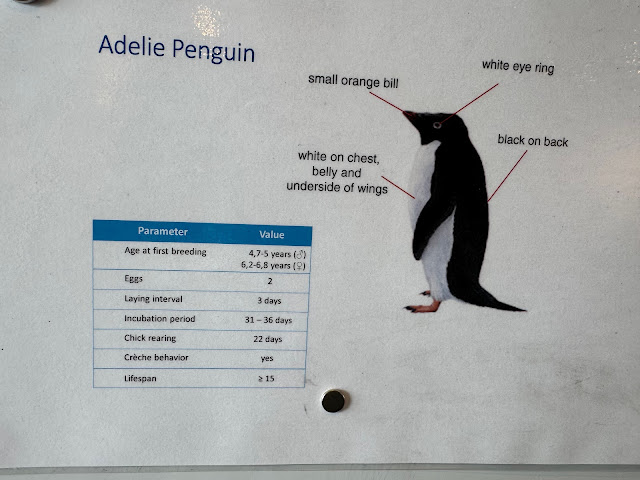
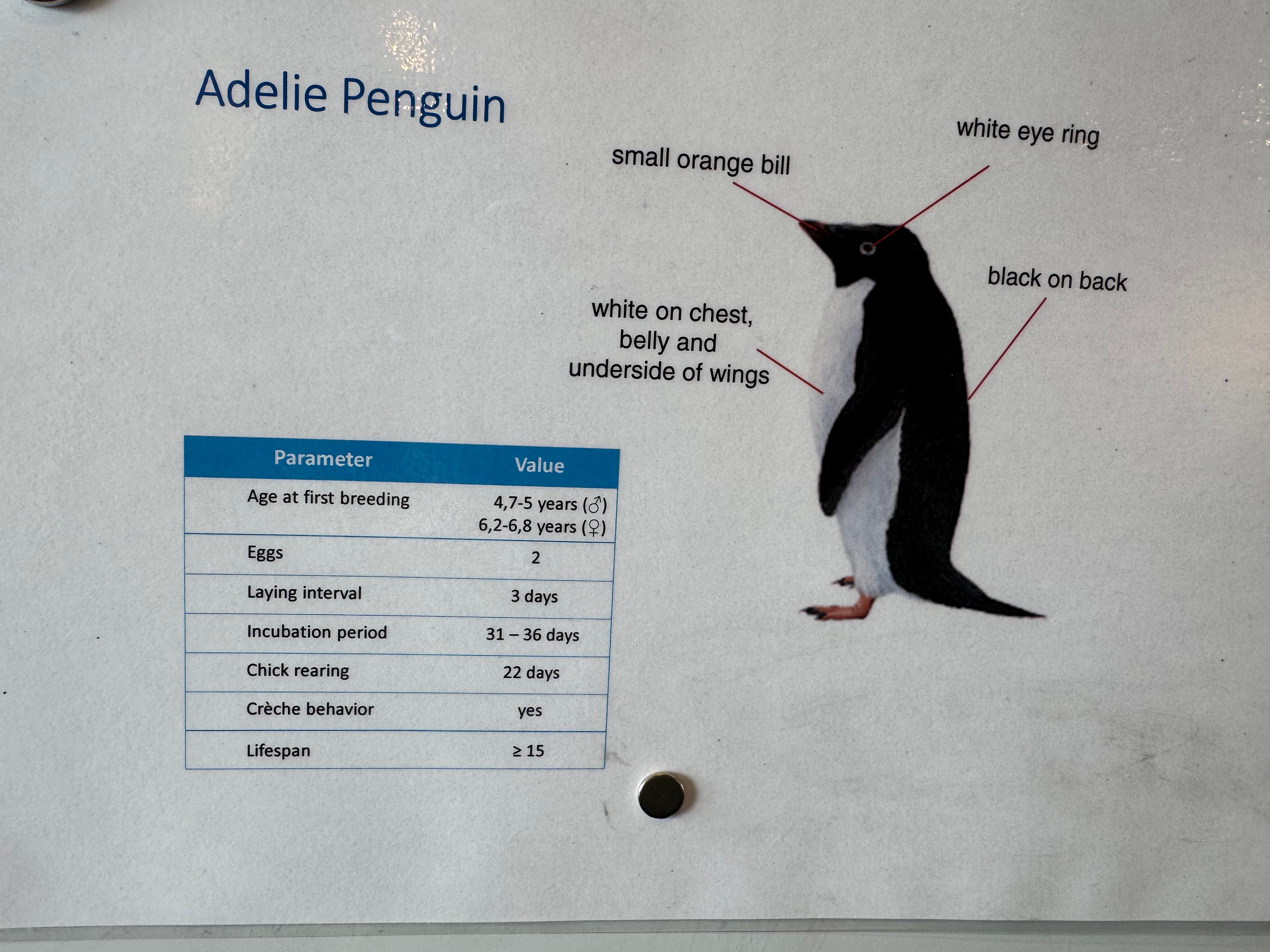
After breakfast, our group was the first one called to the zodiac where we were taken on a short ride to the landing area.  The landing was not too bad although hiking up the hill in thick snow was not easy.  On the island were colonies of Adélie penguins, the smallest species of penguins in Antarctica.  They look cute and a bit clumsy on land but apparently are quite feisty and would even take on predators.  They are vulnerable to climate change because they are not as adaptable to warmer climates.  There were many nests already with young chicks.  We had quite an amusing morning watching their behaviour and interaction.

There were giant icebergs in the bay - I have been asked before how do icebergs in the Arctic compare with icebergs in the Antarctic in terms of size.  I'm no scientist so can't really compare although first impressions are the ones here seem quite big so close to land.  I've seen big ones in the northern part of Greenland but these ones here are really huge.  

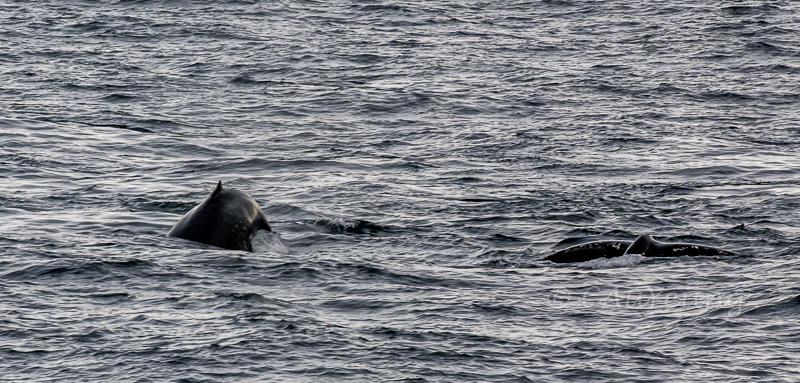
We also had multiple whale sightings while on the zodiac, some of the whales must have been barely 20 feet from our zodiac, one even seemed to have gone under it.  They treated us to many dives showing off their tail fins. On the way back, I was lucky to have the expedition leader driving the zodiac I was in. He is from British Columbia and has accumulated a ton of experience with whales. He could see much better than we do where the whales were and gave us a blow by blow description of what to expect next from the whales. Too bad I only had my phone out - would have liked to capture the tail on a still. I have attached some screenshots from the video clips since I still have trouble posting videos on this blog.

It was quite a morning but there is more to come after lunch!  The routine for the next four days - breakfast, zodiac landing or zodiac cruise, repeat after lunch.  

Iceberg and the MS Expedition

\\\


The only Gentoo penguin couple on the island


A gruesome scene with a brown skua - but that's nature...


Icebergs galore


See how close the whale got beside the zodiac!

Whale tales galore!


Saturday, 1 February 2025

Antarctica - first sighting

The first sighting of Antarctica was at the end of the second day after we came out of the Drake Passage.  We had made good time on the passage.  The expedition leader and the captain decided to push as far south as possible coming out of the Drake taking advantage of the weather and the currents.  So our first view of Antarctica was likely near the Yalour Islands.  

It was exciting to see Antarctica for the first time so I could be forgiven for devoting an entire post to it.  We also had our first sighting of humpbacks between the ship and land.  We were so excited we couldn't sleep and when we looked out the cabin window and saw the very late sunset (close to midnight), we put on our gears again and went back up on deck.

At first it looked like just a snow-covered plateau with huge icebergs around.  Then the landscape became more interesting with some mountain peaks.  And as the sun went down, the light became more intense and the clouds more dramatic.  It was hard to put down our cameras.  

We were lucky to be up and see this spectacle because it was hard to stay up again in the days that followed with the expedition rhythm in full force.  Since we would just be in Antarctica for 4 days, the expedition had to pack everything in  - so it's zodiac landings or zodiac cruises twice a day.  By the end of the day, we were quite exhausted so were quite glad the skies were not clear enough most days for any more spectacular sunsets.


Snow-covered plateau


First whale sighting


Light started to change


Clouds changing with the light


The reflected light on the clouds created a whirlpool effect. 
What a great way to celebrate the arrival at this southern continent!