Thursday, 25 April 2024
Japan in the Spring - Tokyo 1
I visted Japan this spring on a cruise on the south side of the island. We were lucky to have great weather most days, a bit cool, which didn't help the cherry blossoms although we did get a glimpse of it in the last week. The visit is such a pleasurable experience I can't wait to tell you all about it! Thanks to two dear friends who are pros in Japanese food and culture having lived there before and visited regularly since, we were armed with lists of places to see, things to do, places to eat which all helped to make this a great experience.
We started in Tokyo. Haneda airport was easy to negotiate and we found the Airport Express Bus ticket counter easily. I tried self-service at the ticketing machines, it wasn't hard figuring out the route number from the overhead map but it wouldn't take my credit card. (TIP: I have since figured out cash is the way to go for the train tickets!) We finally got tickets at the ticket counter for the bus that took us to the bus terminal a short walk from our hotel in Shinjuku (a district in Tokyo) - a bargain at $12 CAD. (A taxi would have been around $120 and not much faster). There was no problem communicating in English. What a contrast with my first visit in 1975 when hardly anyone spoke English and I remember having to resort to drawing to communicate.
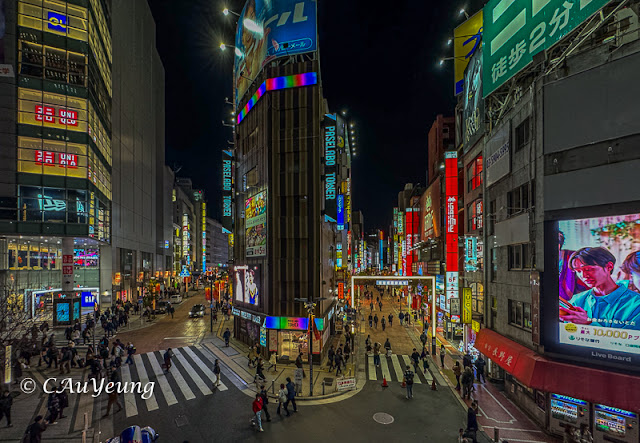
It was dinner time in Tokyo regardless of our body clock so we ventured out to the streets of Shinjuku to gawk at the busy restaurants with tables spilling out onto the sidewalk. It was refreshing to be in a city with a busy street life at night and there didn't seem to be any safety concerns at all. Our first bowl of ramen was tasty and very satisfying!
 |
| Streets of Shinjuku at night |

 |
| An exceptional bowl with spinach, bean sprouts and cabbage, vegetables are not common unless deep-fried! |
Our first destination the following day was the Meiji Shrine. It is just a couple of stations from the hotel and we could have walked but knowing that we had a long day of walking ahead of us, we decided to brave the rush hour traffic and took the train. It was an eye-opening adventure and we experienced in person what we had seen online of Tokyo train stations in rush hour. Proud to say we survived the ticket machine and the crowd and found our way to the relatively peaceful Meijijingu.
 |
| This is how far back we were standing on the platform, but we got on the second train |
 |
| The main Tori gate at the Meiji Jingu |
Sake wine barrels lined the path to the shrine - sacred ritual wine is an essential component of Shinto purification rituals

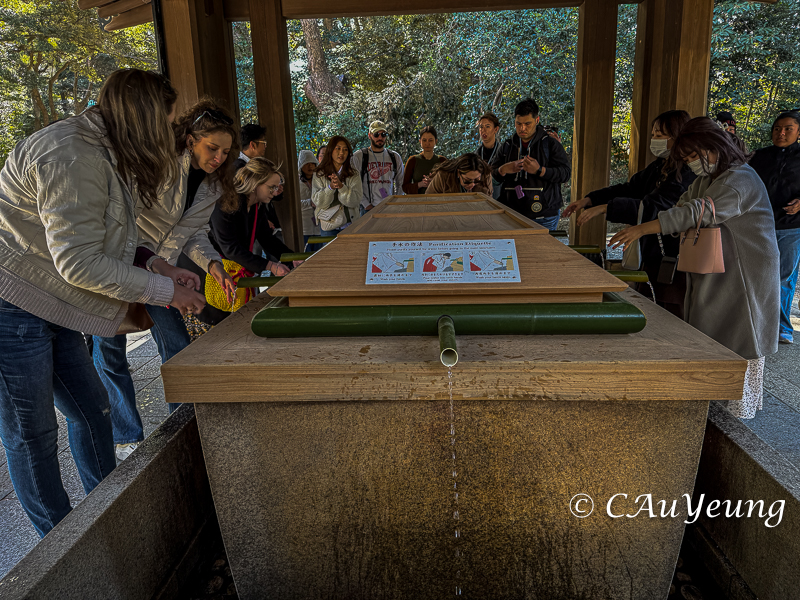
The "temizuya" where worshippers wash their hands and mouth before proceeding
 |
| The main courtyard of the shrine |
 |
| Lineups to purchase amulets and votive tablets |
 |
| Omamori or amulets for luck and protection |

 |
| Ema
- votive tablets for special personal prayers are hung around a divine
tree with wishes written on the reverse side. These are offered at the
morning ceremony held every days and the supplications are conveyed by
the priests. |
 |
| These camphor trees, planted in 1920 at the time of the enshrinement of the Meiji Jingu, are considered sacred. Known as "Meoto Kusu" or "Husband and Wife", the coupled tress have become a symbol of happy marriage and harmonious family life. |
 |
| One of the side entrances |
Because of our early start, we finished at the shrine and ended up on Omotesando Street ahead of schedule, too early for lunch (especially after our sumptuous hotel breakfast). So we walked the famous street with its designer buildings and designer fashion houses all the way to our destination, the National Art Centre.
 |
| Lineup for donuts? |

Omotesando has been describe as the "catwalk" of Tokyo architecture. I can see why. These are just a few that caught my eye.


 |

 |
| Long line up outside the Gentle Monster store. |
 |
| The National Art Centre - stunning in green glass and curves |
 |
| Inside the NAC |


 |
| A reflection of the NAC on the building across the street |
 |
On
our way to Rappongi Station to take the train back to the hotel, we
stopped by a noodle place for lunch, attracted by its distinctive look.
I've since found that many Japanese restaurants have very attractive
entrances. You will see more of these in upcoming posts. |

We went back to the hotel for a midday break - (TIP: it's so important to stay at a place in the middle of everything so we could take these essential breaks.!) We wandered out to Omoide Yokocho, a maze of narrow alleys near the busy Shinjuku Station with lots of street food. These narrow alleys seem to be an incredible hive of activity all day, not just at night.

 |
| Shinjuku Crossing |


Sunday, 5 May 2024
Japan in the Spring - Tokyo 2
We spent our second day in Tokyo with a gentleman from the Tokyo Free Guide. I was alerted to the service by my friend - it was a great experience. I had to apply for the service two months in advance and the service provides a local volunteer as a guide for a day, no fees other than covering meals and transportation costs. The best thing about this is getting to know someone who actually lives there - it was a great cultural exchange. The volunteer actually has to pay a nominal annual fee to be part of the service.
Our guide introduced himself in an email, a retired professional with a spouse and grown up family. He was very helpful in helping us plan our day, pointing out closures, and making reservations for lunch. He picked us up at our hotel and took us to the various spots on our itinerary and at the end of the day went out of his way to show us the way to Ginza.
It was another packed day starting with a trip to the Asakusa Visitor Center, a Kengo Kuma building looking down upon the famous Nakamise Shopping Street. The view from the top was definitely better than the one at street level. It was insanely packed all the way to the Sensoji Temple - apparently a must-visit for Tokyo visitors.
 |
| View from the top floor of the Asakusa Visitor Center, |
 |
| The Asakusa Visitor Center designed by Kengo Kuma |
 |
| Inside the building |
 |
| The busy crossing to Nakamise Shopping Street |
 |
| The packed entrance to the Thunder Gate |
 |
| The even more packed Nakamise Street |

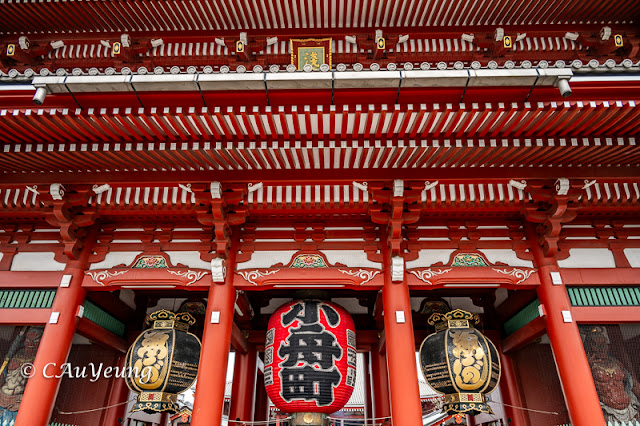
 |
| Younge ladies dressed up for the visit. There is a shop across from the Temple that rents entire outfits, including accessories for tourists. |
Sukiyaki lunch at the Asakusa Imahan was definitely the highlight of the day. Delicious food and amazing service! It was lucky that we had reserved a room because when we arrived at the restaurant, the dining room which doesn't require reservation is completel full and they were not even taking wait lines.


 |
| An after lunch stroll along the waterfront allowed a glimpse of the river and the famous Tokyo Skytree Tower and the Asahi flame (nicknamed the "golden turd" for obvious reasons) |

 |
Otemon Bridge A brown-eared bulbul - a lifer for me in the most unexpected place, and I didn't even have my birding lens with me! |
 |
The Shogun's teahouse surrounded by beautiful Japanese pines. 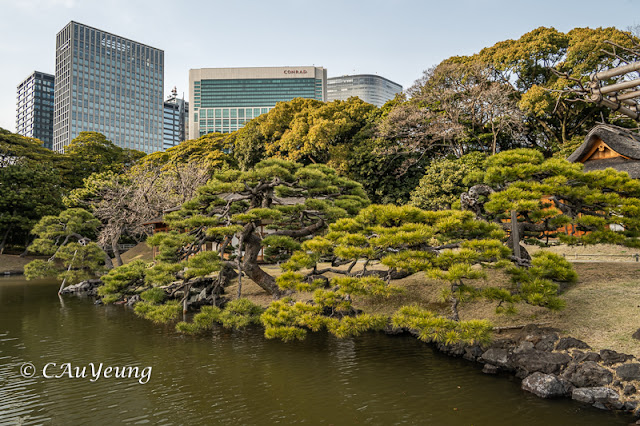 |
 |
| A 300 year old pine on the property |

We walked form the Hamarikyu Gardens to Ginza, gawking at all designer houses along the strip. The Kabuki Theatre was was quite exceptional among all the glitz. Since the neon lights were not on yet we decided to have an early dinner to beat the crowd at the Chikuyotei Ginza. The eel dinner was exceptional! Coming out onto Ginza with its lights turned on was a treat as you can see below.

 |
 |
| Front door of the Theatre |
 |
| One of many interesting buildings on the Ginza strip |
 |
| Ginza crossing - you just have to catch it in that 30 seconds before you get run over! |
 |
| Ginza Crossing when the lights came on |
A few of the buildings on the strip that caught my eye...


I was proud to say that we made it back to the hotel on the subway without having to take a taxi. It was easy, because our Guide had found us the best route among the many options available. Tokyo is just amazing with so many varied options for transport! But even more remarkable was how busy and yet pleasant it was even at night. There were no scary corridors or dangerous platforms to navigate, everything was orderly and calm in spite of the bustle. Above all, it felt safe!
 |
Taking the wrong turn coming out of the subway yielded unexpected opportunities for photography. As the landscape was not familiar, we decided to turn back, but not before taking a few shots! |
This wrapped up our remarkable two days in Tokyo. In the morning, we negotiated the train station again and made it to Yokohama to catch the boat. Wish there were more time in Yokohama as it looked interesting. All I could manage was this night shot of the harbour before we took to sea.

Saturday, 11 May 2024
Japan in the spring - Nagoya

 |
| The first tori gate entrance to the shrine |

 |
| The cleansing fountains |


 |
| The landscaped garden beside the shrine |
 |
| A local doing his hand exercises |
 |
| Nagoya castle |
 |
| The very thick walls of the castle entrance |
 |
| The main palace all on one level |
 |
| The entrance to the palace |
 |
| The rooms were all covered with murals |

 |
| The hallway leading to the reception rooms |
 |
| The stunning artwork in the reception rooms |

 |


 |
| One of many huge kois in the pond |
 |
| Our first plum blossom |
 |
| Pieris |
 |
| A musical spring - you can hear it play through the bamboo pole |
 |
| Bamboo grove |
 |
| Entrance to the garden beside the tea house |
 |
| The teahouse entrance |
 |
| Inside the tea house |
Sunday, 19 May 2024
Japan in the spring - Kochi
Kochi, on the island of Shikoku, seems small enough that I thought we can handle ourselves without joining a shore excursion. The city has arranged a shuttle to take us into town from where it is a short walk to the main attractions - Kochi Castle, the Museum beside it and the Obiyamachi shopping arcade that would lead us straight to the castle. Katsurahama Beach, another atrraction, is a bit further away but it is visible from the ship.
 |
| Katsurahama Beach |

 |
This
open air Obiyamachi arcade with a skylight made with wood has lots of
shops and stalls selling local products. The perfect walkthrough for
tourists heading for the castle. - knick-knacks like ceramic chopstick
rests, dolls, dried fish among others. |


 |
It
was a fairly steep climb to get up to the 400 year old castle after
walking through the very thick walls at the entrance. The 17th century
castle is much smaller than the one in Nagoya so it did not take long to
walk through it. There is access to the tower via some very steep
ladder-like wooden steps so we decided to forego the view from the top
as it's not worth the risk of breaking a leg.  |
 |
| This is the second gate at the top of the climb to the castle |
 |
| This is a side view of the gate tower |

 |
| Kochi castle like other Japanese castles have some shachihoke on its roof - the protective talisman has the head of a tiger/draagon and the body of a carp. |
 |
| Carvings inside the castle |

 |
| The main reception rooms |
 |
| The main study of the shogun. The calligraphy on the wall is probably in Kanji which is adapted from Chinese characters. There is a secret chamber at the back where the shogun's body guard would be stationed ready to come out at a hint of trouble from the shogun's visitors. |
 |
| View from the castle |
 |
| The moat around the castle is now decorative |
 |
| The History Museum at the foot of the castle yielded surprising photo ops with its spectacular architecture. |


 |
| The sumptuous set menu complete with bonito bottom centre, salad, soup, tempurar and dessert |

Friday, 24 May 2024
Japan in the spring - Kagoshima
Kagoshima was the first city where we saw the cherry blossom in bloom on this trip.it was such a pretty sight especially after anticipating it for a week. We saw the cherry blossoms at the Sengan-en Garden, part of the Sengan-en complex, a stately home belonging to the Shimadzu family built since the 17th century. It is a beautifully landscaped traditional Japanese garden attached to the Shimadzu clan residence.
 |
| Cherry blossom in the Sengan-en garden |
 |
Again the Kagoshima city administration offered us a free shuttle from the port to the city centre from where we took a taxi to the garden. The garden could also be reached via the scenic tram loop but as it was at the far end of the loop, it would take an hour to get there via tram. Given that the sky was threatening rain, we thought it prudent to get there as soon as possible before the rain started. We made the right decision because it started to rain just after we finished touring the beautiful garden and home. Fellow passengers who took the ship's short excursion to the garden arrived just as we finished and they toured the garden in the rain. We took the opportunity to go inside the restaurant for lunch to try the famous Kagoshima kurobuta pork (black pig initially bred from Berkshire pigs). |
 |
| The entrance gate to the complex |
 |
| Rhododendrons in the garden |
 |
| It seems that every Japanese garden has a bamboo grove |
 |
| The landscaped garden with the essential pond |

 |
| The gorgeous spring colours extended up the mountain side |
 |
| Pine trees along the waterfront facing the famous volcano |
 |
| The famous Sakurajima volcano was shrouded in clouds while we were there so we never saw the top |

 |
| There are several shrines in the garden but this Cat shrine seems very special |
 |
| Prayers and wishes left by worshippers for their cats |

 |
| One of the impressive gates on the property |
 |
| The layered roofs of the main mansion |
 |
| Love these knots at entrances! |
 |
Inside the mansion |
 |
| This room with decorative panels of birds opened out onto the garden |


 |
| Exquisite! |
 |
| The beauitful central courtyard with its own garden pond - note how the tree inside seemed to extend in harmony with the ones outside |
 |
| The Master bedroom |
 |
| The dining room - an interesting mix of Japanese and western furniture for entertaining foreign visitors. |
 |
| The set menu for the kurobuta pork at the garden restaurant. The Tankan orange drink on the right was delicious. |
 |
| The other volcano nearby Kaimondake was less shy - we were able to see its clear conical shape from the ship |
Sunday, 26 May 2024
Japan in the Spring - Nagasaki
Nagasaki was the only port where we had to walk around with an umbrella but only for a part of the morning. We have been very lucky. There was no free shuttle so we ventured onto a tram after getting some very helpful instructions from the Tourist Information at the port. It was a pleasant tram ride, not too crowded and gave us an opportunity to see the locals. I've noticed that the Japanese ladies are very nicely dressed when they go out, even in the rain.
Our main destination was the Nagasaki Peace Park and the adjacent museum. The Peace Park had some striking memorials as you can see in the photos below. The park was also nicely landscaped on higher ground that can be reached by a covered escalator. Some of the memorials were donated from other countries so it was interesting to see how different nations expressed their compassion for the city that was bombed.
 |
| Fountain of Peace, the centrepiece |
 |
| The beautiful floral pathway up to the Peace Park |
 |
| Memorial to the people who died in the bombing |
 |
| This memorial was donated by the Czech Republic |
 |
Donated by China, the back of the sculpture has the characters that represents "Peace" |

 |
| Peace statue |
 |
| This is where all the wishes for peace in the form of strings of origami cranes are hung |
 |
| View from the Peace Park of Nagasaki with the Immaculate Conception Cathedral |
 |
| All toilets we have encountered in Japan are impressively clean - but this one is actually pretty! |
 |
| Ground zero was marked by this dramatic plaza in between the Peace Park and the Museum. |
 |
| The river separated the Park from the Museum |
 |
| Origami cranes are symbols of peace |

 |
| What luck to come across a snowy egret beside the river |
 |
| After the visit we dropped by the renowned Spectacles Bridge on the way back to the port. I was surprised that it actually looked like a pair of spectacles! |
 |
| A surprise cormorant drying its wings |
 |
| Two children and a dragon - not sure about the symbolism behind this statue, but they all seem to have happy faces |
 |
| A traditional house in between two high rises |
 |
| Japanese lady in the rain |
 |
I have noticed that Japanese restaurant entrances tend to be very decorative. Here are a series of restaurant entrances that caught my eye on the street that ran alongside the river |


 |
| This looks like a shop selling supplies for cats - with an unusual entrance |
 |
Nagasaki Chinatown was our lunch stop. It was quite busy but we were able to find a table at a fairly large restaurant - food was okay but I still missed Chinese greens! |
 |
Chinatown consists of several streets like this one - a lot of reds and golden dragons - unmistakably Chinese... |

It was a short walk from Chinatown back to the ship but on the way, the Nagasaki Art Museum caught my eye. I lucked out because the Museum happened to be running a retrospective on the well-known Japanese artist Yoshimura Yoshio (1950-2013). It was an amazing exhibit of the works of this artist known for his awesome pencil drawings - a feast for the eyes. I can only include a few here but the exhibit included "perfect reproductions of newspapers made by copying every single character by hand, a series of self-portraits made every day for a year, and a ten-meter-long depiction of flowers that could easily be mistaken for a photograph." It was an unexpected bonus.
 |
| Nagasaki Art Museum |


 |
| Yoshimura Yoshio self-portraits |
 |
The 10 metre wisteria painting done with Faber colour pencils and close-up below |

 |
Nagasaki waterfront |

Wednesday, 29 May 2024
Japan in the Spring - Busan (Korea)
It's strange to put this under Japan in the Spring when Busan is actually in Korea.. I kept the heading just to keep everything together. There seems to be some legality that requires a cruise ship to visit at least one international port during a cruise, in this case, it's Busan. We joined the ship's shore excursion as it was an early port departure and we didn't want to miss the boat.
Busan looked like a busy international port with loads of cranes, bridges and containers visible on the waterfront. Our first stop was the temple by the sea - the Haedong Yonggungsa Temple. It is in a beautiful seaside setting north of Busan. Our Korean guide spent a lot of time talking about Korean social issues but didn't talk much about this Buddhist temple. Some of the rooms are quite spectacular as is the seaside it faces.
 |
| The Haedong Yonggungsa Temple |
 |
| The lineup of animals representing the zodiac along the entrance |

 |
| One of several dazzling chambers |
 |
| Golden buddha |
 |
| Many steps lead to the upper levels |

 |
| The essential bamboo grove |
 |
| The seaside in front of the temple |

 |
| The Nurimaru APEC House |
 |
| The conference room |
 |
This waterfront trail leads to the mermaid statue on the rocks, reminiscent of that other famous mermai in Europe |

 |
| Eurasian Magpie (another lifer for me!) and camellia flowers on the island |
The bus took us back to the city where we were taken to the gigantic fish market - a real eye-opener. We were rained out for the subsequent tour of the shopping street but it was interesting to see some of the shopping alleys - very Asian in character.
 |
An incredible variety of shellfish! These are smaller stalls outside the actual fish market |

 |
Inside the actual fish market |

 |
| The impressive building housing the fish market |
 |
| Roadside stalls just outside the fish market |
 |
The shopping streets - this could be anywhere in Asia! |
 |
 |
| There is even a star walk |
 |
Containers galore |
 |
| Bridges and cranes dot the waterfront skyline near the port |

 |
| These look like oyster farms in the harbour |
 |
| The fireboat gave us a cool farewell display |
 |
| Port of Busan panorama |
This short stop in Busan gave me a first glimpse of Korea - the brief insight into Korean society provided by our chatty guide (identifying social and academic pressures) helped me understand a little better where movies like Parasite and Minari originated from.
Next post: Hiroshima
Wednesday, 5 June 2024
Japan in the Spring - Miyajima (Hiroshima)
After our stop in Busan, Korea, we had to go through re-entry process again with the Japanese Immigration officials who came on board at Hiroshima. It took all morning before we could get off the ship, one of the most disappointing moments on this trip. There wasn't enough time to see everything we planned to see so we had to make a choice - Hiroshima Peace Park or Miyajima and its floating Tori gate. Since Miyajima was one of the main reasons I joined this tour, the choice was obvious. We had already seen the Nagasaki Peace Park, while the two are not the same, it would have similar vibes.
We missed the noon ferry from the pier close to where the ship was docked so we took a taxi to the regular ferry to Miyajima. This particular taxi experience was heart-warming. The driver was so enthusiastic it was an impressive display of the Japanese commitment to doing a good job. He didn't speak any English but he made an extra effort to communicate with us via Google translate on his phone. He had suggested we should try going to the closer ferry so we can save on the taxi fare. After I explained why we can't, he took us to the regular ferry 10km away all the while pointing out interesting sights along the way to us. We knew he didn't do this for a tip as there is no tipping in Japan. When we got off, he gave us each a candy! What a lovely encounter!
We arrived at Miyajima just before the tide recedes so we were able to catch the Tori gate while it is still more or less surrounded by water "floating" and not swarmed by people. You can see the difference in the atmosphere between high and low tides. The shrine itself is beautiful.
Miyajima is also famous for its oysters. We were able to get easily into the famous oyster restaurant Kakiya for lunch because by the time we finish at the shrine, it was almost three o'clock and the regularly long lineups to get in have disappeared. The set menu lunch had oysters made in several different ways - all fresh and delicious! What a treat!
 |
| Just before low tide |
 |
| Low tide |
 |
| Viewed from the ferry before the tide completely receded |
 |
The Itsukushima Shrine |


 |
The essential wine barrels - symbolic offerings to deities and representing the connection between the spiritual and human realms |
 |
This is a side pavillion at the shrine - love the mural! |
 |
| A buddhist temple on the island |

 |
| Getting aggresive |
 |
The town |

 |
Kakiya Restsaurant - not to be missed! |
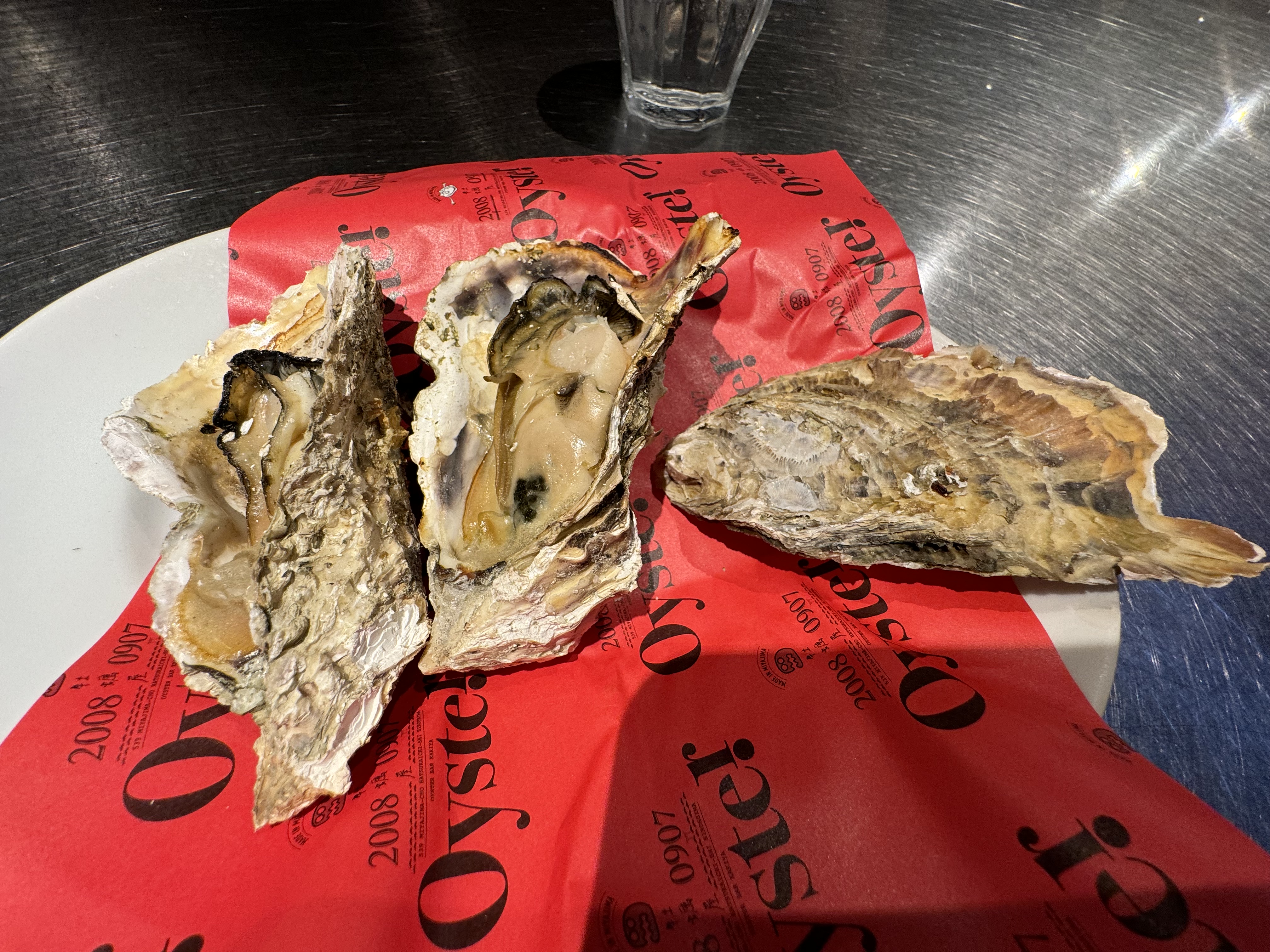 |
| Oysters grilled in the shell |
 |
| Steamed, deep fried, smoked... |
 |
| Jumbo chestnuts! |
 |
| This is the high speed boat that took us back to the port - not far from where the ship was docked. |
 |
| The taxi driver made sure we saw the woman sleeping on top of Miyajima |
 |
| Oyster farms |
We didn't see much of Hiroshima other than from the cab. It could mean another visit. And perhaps the Tori gate at sunset...
Thursday, 13 June 2024
Japan in the Spring - Beppu
 |
| Macaque Monkeys at play |
 |
| Young one enjoying a quiet moment |
 |
| A nursing mother & baby |
 |
| Family portrait |
 |
| Obsessive fur picking |
 |
| I found this old guy interesting with his wrinkles - so human-like |
 |
| A beautiful pond at the main entrance complete with cherry blossoms |
 |
Umi Jigoku: Ocean Hell - a picturesque hell with a green pond and blue pond complete with Tori gate |
 |
 |
Tori gates leading to the Hot spring Shrine |

 |
Onishibozu Jigoku has these mud bubbles - interesting although not pretty |

 |
 |
| Cute rock art at the spring |
 |
Kamado Jigoku has a blue pond with some beatuiful trees above it and a blood red pond |

 |
| Demon Mountain Hell has ponds of crocodiles. Apparently crocodiles have been raised in these 98degree springs for a hundred years |

 |
hiraike Jigoku White Pond Hell is surrounded by a lovely garden  |
 |
| This statue commeorates the monk founder of that "hell" |
We were lucky to spot a taxi that had just delivered its load of passengers to the Hells tour so it was a short ride back to the ship. It was a full day of touring at minimal expense. We would not have seen as much with an expensive shore excursion from the ship.
 |
| Beppu drummers went all out to send the ship off |
Next post: Kyoto
Tuesday, 18 June 2024
Japan in the Spring - Kyoto
We were docked at Kobe for two nights which theoretically would give us lots of time in Kyoto. Unfortunately there was a stormy sea the night before and the ship arrived more than an hour late at Kobe which threw our tour plans out of whack. Our booked private tour that was supposed to start at 8am and hopefully missed the rush hour traffic into Kyoto didn't start till close to 10am by which time the roads were packed and it was a long two hour drive into Kyoto. It was our only day in Kyoto because it coincided with the Easter weekend over peak cherry blossom season and all the guides were booked. Lesson learned - try not to go to Japan during cherry blossom season. True, you may get to see the blossoms but it was crowded everywhere and really detracted from the whole experience if cherry blossoms are not the only reason why you are in Japan.
Our first stop was the bamboo forest. The streets leading to the forest were all jam packed, as was the hike into the forest. The bamboo forest was spectacular, as long as you look up and not around you!


 |
| Cherry blossoms out by the river |
 |
| Egret in breeding plumage foraging on the river |
 |
River cruise boats |

 |
| This is what the streets leading to the bamboo forest looked like |

 |
| From the back, the gold leaf is not so obvious because there was no sun on it |
 |
This is the hojo, the living quarters of the former head priest beside the pavilion - it has a zen garden on the side |


 |
| Kyoto Tower |
 |
| Fushimi Inari shrine |
 |
| Cleansing fountain |
 |
| The dog is the usually the guardians at Shinto shrines but at Fushimi Inari, they are replaced by foxes |
 |
| This is the way up |
 |
| This was taken on the way down |
 |
 |
| The exit gate |
Our last stop was a visit to the Gion district, Kyoto's famous geisha district. We were not able to encounter a geisha on her way to work but lots of tourists.


 |
Interesting restaurant entrances |


 |
Night view of Kobe port |

Thursday, 20 June 2024
Japan in the Spring - Kobe & Osaka
We were docked in Kobe for two days but we never got out to see Kobe as Kyoto and Osaka seemed more interesting. However we were treated to a performance of Japanese drums while we were in Kobe. These young Taiko drummers were so energetic with such a great rhythmic sense, it was a totally immersive experience. The intense pulse of the beats reverberates through our senses - a memorable encounter with a 12,000 year old art form.


The following morning we set out on an adventure to Osaka, testing our wits with the Japanese train system. It turned out to be not a big deal because of the amazingly connected transit system and the helpfulness (once again) of the Japanese locals. There was a port liner train that stopped right by the Kobe port terminal. We stepped off the boat into the terminal and onto the train that took us to the train station in Kobe from where we took a train to Osaka. After hearing me ask another passenger whether we were headed in the right direction to Osaka, a very helpful lady came up to me and shared her screen with me - she had a list of all the stations that we would be passing through before we get to Osaka.
 |
 |
| Commuter fashion...? |
My interest in Osaka was strictly seeing the Dotombori area with its vibrant street life. We didn't have a lot of time as it was an early port departure so we kept an eye on the time to make sure we don't miss the boat. The area was an eye-opener for us, coming from the staid North American cities we are used to. Take a look at the images to get a sense of the flamboyant billboards and signage all vying for your attention.
 |
| Note the famous crab with moving claws! |
 |
| An octopus and a dragon... |
 |
The noodles in this place must be good - customers slurp their noodles standing up |

 |
| Long lineups in front of this octopus |
 |
| The canal runs through the district |
 |
Ebisu Tower Ferris Wheel |
 |
 |
| The must-see must-pose-in-front-of Glico running man sign! It's been there since 1935 and one of the most well-known landmarks in Osaka. |
 |
| The designer shopping street |
 |
After
two weeks in Japan we had our first bowl of soba noodles in this
restaurant - I just needed to know that the soba I tasted at home are
close to the real thing...it didn't disappoint. The return trip was smooth - we just did everything in reverse and made it back to port! |
 |
| The
lit up low building on the left is the terminal for the port liner that
took us to the train station. The deck of the ship is in the
foreground - that's how close it was. |
Saturday, 22 June 2024
Japan in the Spring - Shimizu
Shimizu has a lot of attractions but it is mainly known for its views of Mt. Fuji. The mountain would magically appear out of nowhere and also disappear without notice - it is also stunningly beautfiul, no matter how many times one has looked at it. This means it is the subject of pursuit by tourists - every time it is visible, everyone gawks, never mind what else the guide was pointing out.
We were lucky to get many views of Mt. Fuji with different foregrounds. And this post is mainly about this magical mountain, the symbol of Japan and worshipped as sacred. I did not get iconic shots with reflections or with cherry trees in the foreground but being able to see it and capture shots of it was already a wonderful treat for me. It rather reminded me of Mt. Rainier in Washington which also habitually appears and disappears, equally elusive and has a haunting presence over the Seattle skyline as does Mt. Fuji over the many cities in Japan from which it can be visible - sometimes.
 |
| First sighting from the ship - wish I had remembered that at sunset when I could have seen the sun hit the top right from the ship's deck, but I missed that, much to my regret... |
 |
| Framed by cherry trees but no blossoms yet... |
 |
| On the way to the Fujisan Hongu Sengen Taisha Shrine - this is where climbers come to pray before their ascent. It is known as the protector from natural disasters and easy childbirth. At the temple, we were lucky to see a wedding, a bride to be with her family and a newborn baby in traditional costumes. |


 |
| Bride and groom in traditional costumers (Photo credit: D. Quon) |
 |
| And cherry trees in bloom! |


 |
| A bride to be |
 |
A newborn at the shrine for a blessing |
 |
Wakutama Pond where climbers would traditionally wash before making the ascent |


 |
| Mt. Fuji from the beach at Miho no Matsubara - it was covered by haze when we were there so I was really grateful for the Dehaze feature in Lightroom! |
 |
| I was also grateful for this serene gentleman sitting in the square at the pine grove |
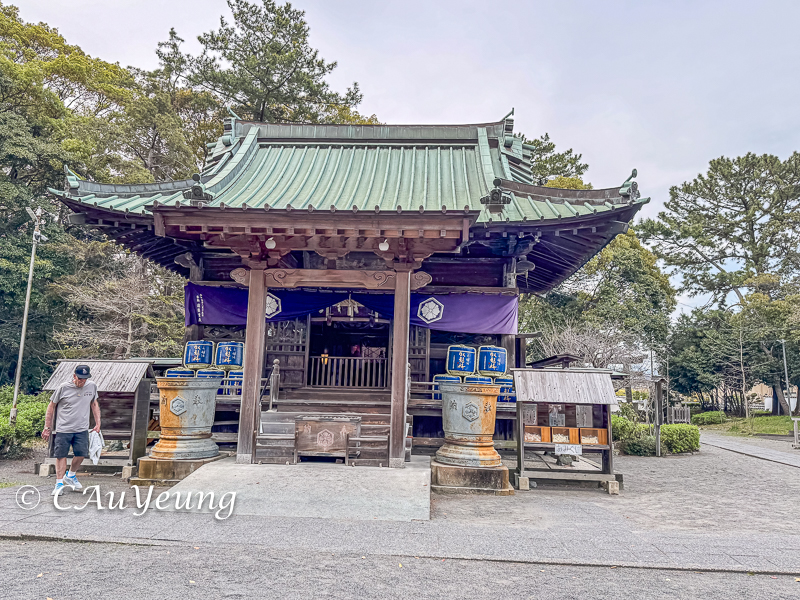 |
The small Miho Shrine and its Tori Gate |

 |
| The waterfront at Shimiu with its many modern silos and the obligatory ferris wheel |
Shimizu was the last port before we made our final docking back at Yokohama. It was a lovely two weeks in charming Japan, certainly a place I would return to, perhaps one autumn for its famously gorgeous fall colours. Thank you for coming along on the trip.


No comments:
Post a Comment