Monday, 17 February 2025

Antarctica - Lemaire Channel, Port Lockroy

 The Lemaire Channel, a strait off Antarctica, 11 km long and only 600 metres wide in its narrowest spot, is a challenge to go through and not every ship can get through it depending on whether the ice has cleared.  So I had picked high summer in the Antarctic with hopes of seeing the Lemaire with its iconic steep cliffs on both sides complete with reflections and all.  Well, we did see it, kind of, but in fog - it was not the postcard perfect Lemaire that had it nicknamed the Kodak Gap.  But we all know how unpredictable the weather can be and the ship on a tight schedule had to go through it when it did.  The irony is after we passed through and headed north, the weather cleared and the afternoon was sunny.  🤷

Excitement on deck as we approached the south entrance of the Lemaire


Impressive rock face


We like to console ourselves that it is lovely even in fog, which it is...


It didn't take long to get through the channel and to keep us entertained, the inevitable Polar Dip was scheduled that same morning.  It was cold and windy but many brave souls took the plunge nevertheless.  Cold enough for the photographer from the upper deck - but it takes a different kind of spirit to take the plunge!


Our afternoon destination was Jougla Point at Port Lockroy.  Port Lockroy is the first continuously occupied British base in Antarctica with a year round presence.  It has the only post office in Antarctica so it was a ritual for us to write our postcards and have them mailed at the post office where they will be sent to the Falklands then to the U.K. before they get sent to the address on our postcards - a long journey that we were told could take months, perhaps years?  We shall see...meanwhile making sure we send the postcards to someone likely to outlive us...

Beatufiul landscape at the bay at Jougla Point but not so pretty on landing - lots of penguin gano and slippery rocks plus the strong wind gusts made photography very difficult.  We were ferried over to the Post Office by zodiac.  


Chinstrap Penguins at Jougla Point in Port Lockroy


First sign of human habitation we saw on Antarctica


This is the Post Office at Port Lockroy.  It must take the stamina of a hermit to stay in a place like this for long months in the year.  The staff was invited on board for lunch - a nice break for them from the monotony.


We went on a short cruise around Jougla Point and saw some more chinstraps and blue-eyed Antarctic shag along with a South Polar Skua in the air.


Chinstrap Penguin


Blue-eye Antarctic shag

South Polar Skua

We wrapped up the day with a scrumptious barbeque dinner where we stuffed outselves.  I've had these dinners out on deck on three arctic trips but obviously not advisable on this cold and windy Antarctic day. 


Saturday, 8 February 2025

Antarctica - Port Charcot Gentoo Penguins

Port Charcot is a bay on the north side of Booth Island, which is off the Kiev Peninsula to the west of the Lemaire Channel.  It was first mapped by Jean-Baptise Charcot who led the 2nd French Antarctic expedition in 1904.  He overwintered here and left a cairn which you can see at the top of the hill.  

The landing spot.  The cairn is at the top of hill.


I forgo the pleasure of the view promised at the top of the hill and took my time watching the Gentoo Penguins that were nesting here.  The Gentoos were the largest of the brushtail penguins and supposedly the fastest underwater birds. They were slightly earlier in their breeding cycles than the Adélie Penguins so they were still brooding in their roosts.  We had to wait till they decide to get up to stretch so we can see the eggs. Both parents take turns incubating the eggs.  

There were also some chinstrap and Adelie penguins here too.  The blue-eyed shags nest right in the midst of the penguins.


The Gentoo, distinguished by its red beak


Parents take turns incubating the eggs


Nests lined with pebbles


An egg!


Penguin highways - the pink is from guano , which took on the colour from the krill the penguins fed on


The gentoos took great care picking their way through the rocks, almost like humans


A hop, skip and a jump!


This one Adelie penguin tried to "swim" on its tummy over the ice.


These two chinstraps are hilarious, almost posing for the camera


The blue-eyed shags nest right in the midst of the penguins - here is a good-sized chick

One of the parents flew off maybe looking for food for these open beaks...


We walked along one of the penguin highways leading to the landing area


This is a closeup look at the layers that made up the icecap


The weather changes very quickly down here - mist would roll in unnoticed and could disappear just as fast.


We cruised among giant icebergs on the way back to the ship.


The ship provided a sense of scale for the icebergs


 Our route in Antarctica


Wednesday, 5 February 2025

Antarctica - Yalour Islands

Our first morning in Antarctica, we dropped anchor near one of the Yalour Islands, in the south part of the Wilhelm Archipelago.  I was up on deck before breakfast to soak in the otherworldly landscape - it was absolutely stunning.  

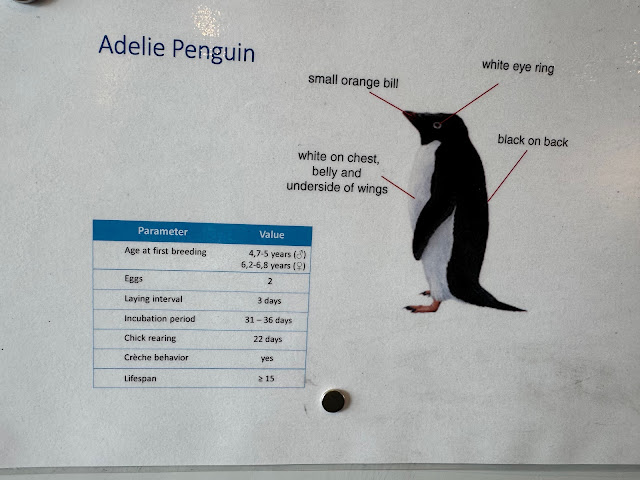
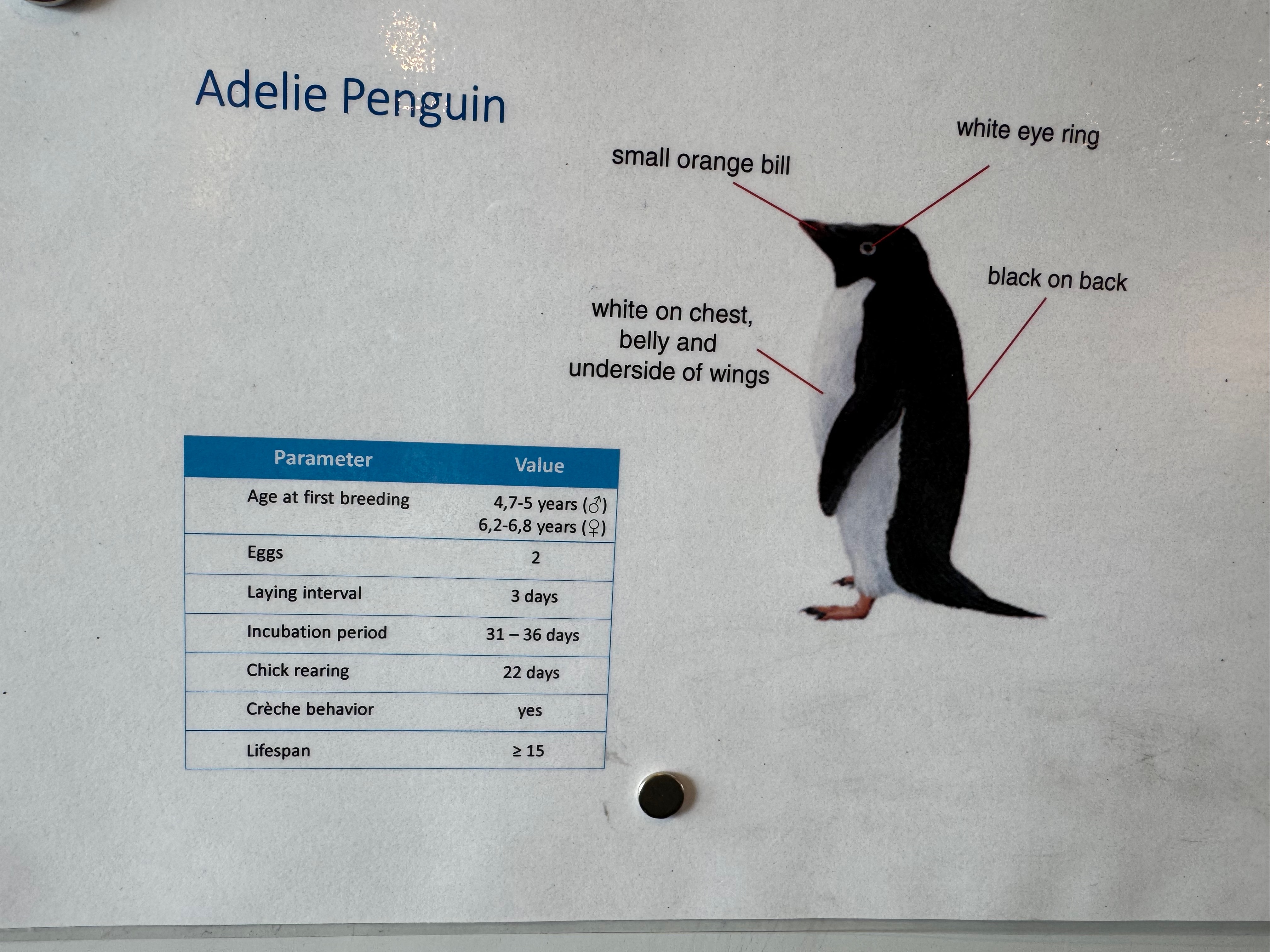
After breakfast, our group was the first one called to the zodiac where we were taken on a short ride to the landing area.  The landing was not too bad although hiking up the hill in thick snow was not easy.  On the island were colonies of Adélie penguins, the smallest species of penguins in Antarctica.  They look cute and a bit clumsy on land but apparently are quite feisty and would even take on predators.  They are vulnerable to climate change because they are not as adaptable to warmer climates.  There were many nests already with young chicks.  We had quite an amusing morning watching their behaviour and interaction.

There were giant icebergs in the bay - I have been asked before how do icebergs in the Arctic compare with icebergs in the Antarctic in terms of size.  I'm no scientist so can't really compare although first impressions are the ones here seem quite big so close to land.  I've seen big ones in the northern part of Greenland but these ones here are really huge.  

We also had multiple whale sightings while on the zodiac, some of the whales must have been barely 20 feet from our zodiac, one even seemed to have gone under it.  They treated us to many dives showing off their tail fins. On the way back, I was lucky to have the expedition leader driving the zodiac I was in. He is from British Columbia and has accumulated a ton of experience with whales. He could see much better than we do where the whales were and gave us a blow by blow description of what to expect next from the whales. Too bad I only had my phone out - would have liked to capture the tail on a still. I have attached some screenshots from the video clips since I still have trouble posting videos on this blog.

It was quite a morning but there is more to come after lunch!  The routine for the next four days - breakfast, zodiac landing or zodiac cruise, repeat after lunch.  

Iceberg and the MS Expedition

\\\


The only Gentoo penguin couple on the island


A gruesome scene with a brown skua - but that's nature...


Icebergs galore


See how close the whale got beside the zodiac!

Whale tales galore!